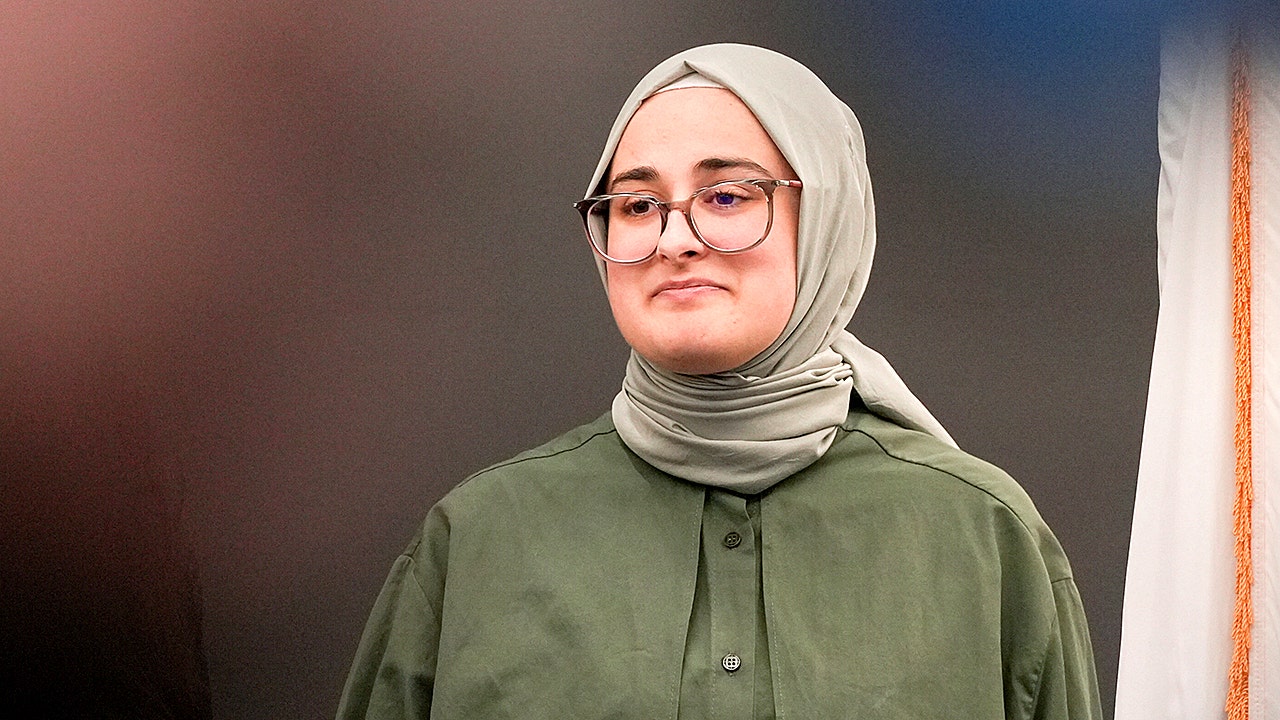
Tufts student Rumeysa Ozturk reportedly self-deports to Turkey
Title: Turkish Grad Student Rumeysa Ozturk Self-Deports to Turkey Amid Legal Battle
In a surprising turn of events, Tufts University medical graduate student Rumeysa Ozturk, originally from Turkey, has reportedly self-deported to her home country following a legal battle with the Department of Homeland Security (DHS). Ozturk’s troubles began when she was detained by ICE in Somerville, Massachusetts, in March 2025, on allegations of "engaging in activities in support of Hamas."
The Trump administration revoked Ozturk’s F-1 student visa, citing her involvement in protests and demonstrations related to Israel and Palestine. This move was part of a broader crackdown on student visas for individuals deemed to be anti-Israel. Ozturk’s arrest sparked protests at Tufts and across the country, leading to a heated legal battle between her and the government.
Despite being released on bail two months after her arrest, Ozturk’s legal troubles continued. She was transferred to different facilities across several states before finally self-deporting to Turkey late Thursday night. In a statement, Ozturk expressed pride in completing her Ph.D. and stated that she was returning home on her own terms after years of study.
Ozturk’s case drew attention to the issue of free speech on college campuses, with Secretary of State Marco Rubio mentioning her involvement in writing op-eds critical of Israel. The Department of Justice condemned Ozturk’s actions, stating that attending U.S. colleges is a privilege that should be respected.
The legal battle culminated in a ruling by Boston immigration Judge Roopal Patel, who terminated deportation proceedings against Ozturk, citing a lack of legal grounds for deportation. Ozturk, represented by the ACLU, expressed relief at the ruling and called for justice for immigrants facing mistreatment.
Despite the ruling, the Trump administration fired Judge Patel and other immigration judges, signaling a shift in immigration policy. The administration emphasized its commitment to enforcing immigration laws and ending what it called the "era of amnesty."
Ozturk’s case highlights the complex intersection of free speech, immigration policy, and foreign relations. As she returns to Turkey, the debate over student activism and government crackdowns on dissent continues to rage on. The outcome of Ozturk’s legal battle serves as a cautionary tale for foreign students in the U.S. and raises important questions about academic freedom and political expression. ## Tufts student Rumeysa Ozturk reportedly self-deports to Turkey
⚡ Key Facts
- The Core: Tufts student Rumeysa Ozturk has reportedly self-deported to Turkey.
- The Breakdown: This action comes after Ozturk co-authored an anti-Israel op-ed while studying in the U.S.
- The Impact: The news is trending due to the legal battle and Department of Homeland Security involvement.
—
🔍 The Deep Dive
Why it’s happening: Rumeysa Ozturk’s decision to self-deport to Turkey follows the controversy surrounding her anti-Israel op-ed co-authored during her time at Tufts University. The Department of Homeland Security became involved in the legal battle leading to her departure. Read more
From one perspective: Advocates for change suggest that Ozturk’s self-deportation highlights the need for open dialogue and understanding of differing viewpoints on sensitive issues like the Israeli-Palestinian conflict. Read more
On the other hand: Conversely, critics maintain that Ozturk’s actions were unacceptable and that individuals should be held accountable for their public statements, especially when they involve controversial topics like international politics. Read more
🏁 The Bottom Line
The self-deportation of Tufts student Rumeysa Ozturk to Turkey has sparked debates on free speech, accountability, and cultural sensitivity. Watch for potential developments in the legal and academic repercussions of this case.