
When the Supreme Court split 6-3 in a very different way on capital punishment
Welcome back, Deadline: Legal Newsletter readers. I’ll tell you the answer soon. But, without looking it up, if you don’t know already: Does the Constitution permit the execution of intellectually disabled people? If your first thought is that such an execution would obviously be unconstitutional, when do you think the Supreme Court said so?
The answer: 2002.
Even at that late date in American history, it was only by a 6-3 vote that the court deemed such executions to violate the Eighth Amendment’s ban on cruel and unusual punishment. In Atkins v. Virginia, Justice John Paul Stevens cited the growing opposition to the practice among states.
“This consensus unquestionably reflects widespread judgment about the relative culpability of mentally retarded offenders, and the relationship between mental retardation and the penological purposes served by the death penalty,” Stevens wrote, joined by Justices Sandra Day O’Connor, Anthony Kennedy, David Souter, Ruth Bader Ginsburg and Stephen Breyer.
Though the three dissenters were all GOP appointees, Atkins wasn’t a party-line split like the ones we see today. That’s because today’s party lines — where the six Republican appointees align with Republican policies in big cases, and vice versa for the three Democratic appointees — didn’t exist even a couple of decades ago.
Indeed, that’s a consequence of the reaction to the more “liberal” votes of GOP appointees like Stevens and, more famously, Souter — who prompted conservative cries of “No More Souters” and led to a hardening of the confirmation process that now produces nominees who know to show up for the right team in the big games.
Of the three Atkins dissenters, only Justice Clarence Thomas is still on the court today. The other two were Chief Justice William Rehnquist and Justice Antonin Scalia, who were replaced by the current chief justice, John Roberts, and Justice Neil Gorsuch, respectively. Along with Justices Samuel Alito (who replaced O’Connor), Kavanaugh (who replaced Kennedy) and Barrett (who replaced Ginsburg), Thomas is now part of a six-justice majority that would not have issued the Atkins ruling had it been in power then. Today’s majority has broadly been in the business of helping executions go forward.
So it was interesting this week when the court split 5-4 over the latest fallout from the Atkins ruling, which has continued to prompt disputes over how it applies. It was noteworthy because the split — with Kavanaugh and Barrett forming a surprise majority with the three Democratic appointees — led the court to dismiss an appeal brought by Alabama officials who were seeking to execute a prisoner, Joseph Smith, for the 1997 murder of Durk Van Dam. After the lower courts voted to keep Smith out of the death chamber, the justices had agreed to review the state’s appeal, specifically to consider how to evaluate the effect of multiple IQ scores in assessing an “Atkins claim,” as such pleas based on the 2002 precedent came to be called.
But the justices didn’t decide the question. Instead, on Thursday, the court issued what’s known as a “DIG,” dismissing Alabama’s appeal as “improvidently granted.” That happens when the court decides after it takes up an appeal that, upon reflection, it shouldn’t have gotten involved in the first place. As is the norm in such situations, the court didn’t explain why it took that step on Thursday, writing only that Alabama’s appeal “is dismissed as improvidently granted.”
So how do we know it’s a 5-4 split? Because some of the justices wrote separate opinions accompanying the DIG, including a four-justice dissent authored by Alito, explaining why, in his view, the court should have taken the opportunity to provide guidance on the issue to the lower courts. He was joined by Thomas, Roberts and Gorsuch. Because there were four dissenters, that meant Kavanaugh and Barrett had to have joined the three Democratic appointees to dismiss the case, because otherwise the GOP appointees would have had a majority to decide the case however they wanted.
Recommended

Jordan Rubin is the Deadline: Legal Blog writer. He was a prosecutor for the New York County District Attorney’s Office in Manhattan and is the author of “Bizarro,” a book about the secret war on synthetic drugs. Before he joined MS NOW, he was a legal reporter for Bloomberg Law.
Latest Post

Related Posts











More in US News









Top Stories

Fake CAPTCHA scam installs malware when you follow keyboard commands


Physical therapist reveals 5 walking mistakes hurting your health goals

Charles Barkley gets into hysterical back-and-forth with Knicks star OG Anunoby about his ‘real name’

Rep. Massie says he would support short-term Iran deal amid rising costs

Caitlin Clark tells Indy 500 drivers to start their cars as grand marshal
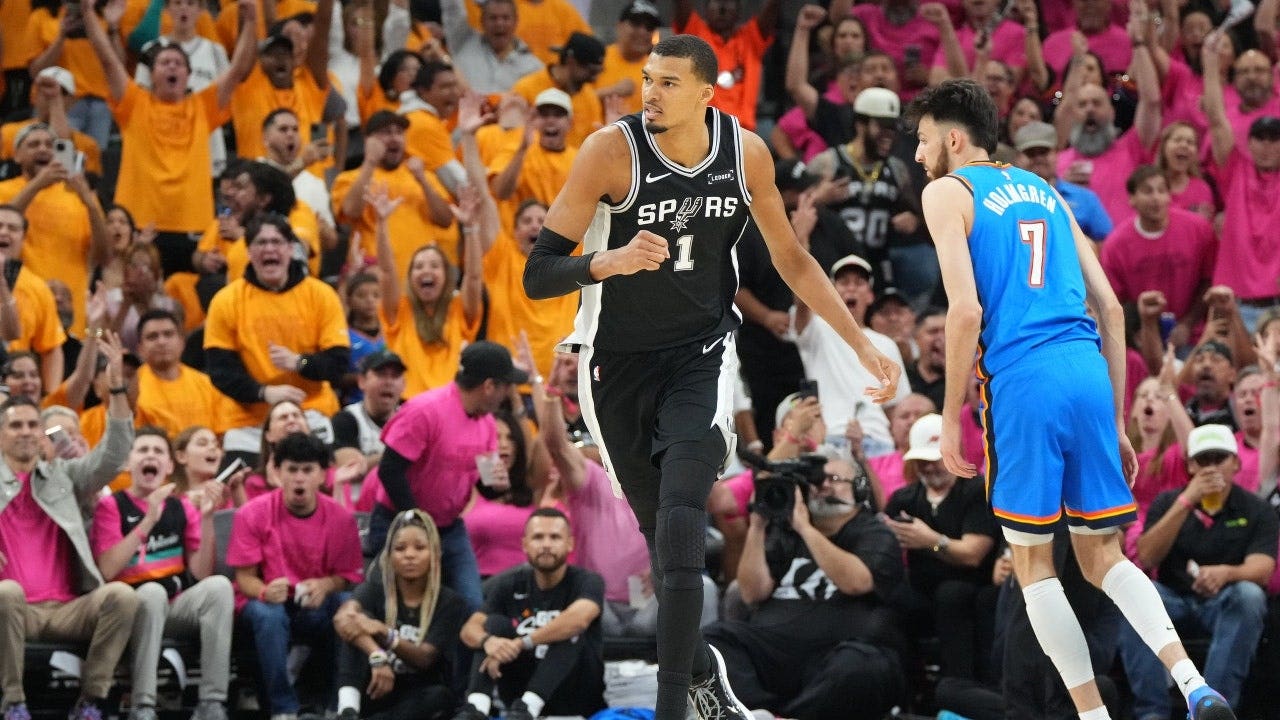
Oklahoma City Thunder at San Antonio Spurs Game 4 best bets include a side and two player props

Figure AI says its humanoid robots ran 24 hours straight sorting packages

Curt Cignetti jokes he had to ‘coach the hell out’ of undefeated Hoosiers to be Indy 500 pace car driver

Trump, Netanyahu friction was a calculated feint against Iran, says analyst

‘Game of Thrones’ star Hannah Murray says wellness cult led to psychosis