Supreme Court declines to hear Alan Dershowitz’s defamation appeal against CNN

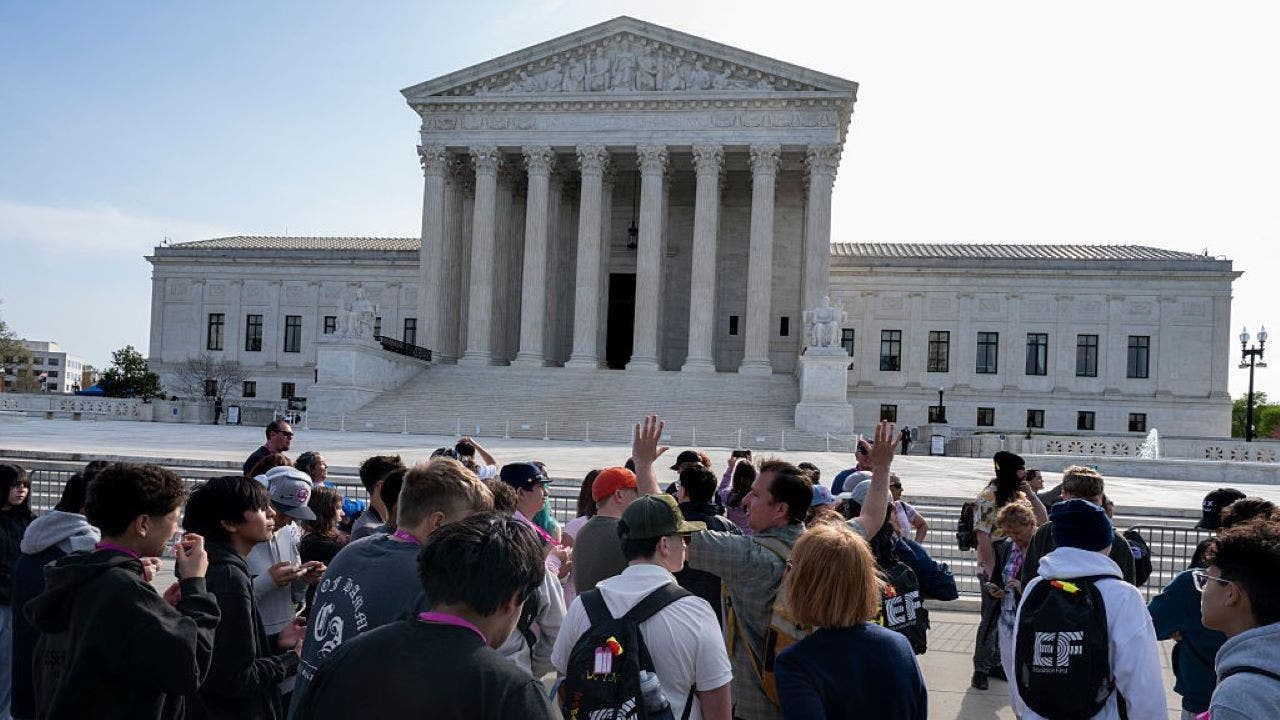
The Supreme Court declined to hear Alan Dershowitz’s defamation appeal against CNN, marking the court’s latest refusal to reconsider the landmark 1964 press freedom ruling in New York Times v. Sullivan.
The court has consistently declined to hear appeals seeking to weaken or overturn the precedent that makes plaintiffs who are public figures meet the demanding “actual malice” standard. Under that standard, plaintiffs must show the defendants’ knowledge of, or reckless disregard for, the falsity of statements they publish.
In line with the court’s typical practice, there was no explanation for Monday’s denial of Dershowitz’s petition. It takes four justices to grant review.
Justices Clarence Thomas and Neil Gorsuch dissented from the denial, echoing their previous calls for the court to revisit Sullivan and the actual malice standard.
Dershowitz’s suit against CNN stemmed from his representation of Donald Trump during his first impeachment trial in his first term. The president was accused in 2019 of abusing his power by urging Ukraine to announce an investigation of Joe Biden, against whom Trump would run in the 2020 election. (The Senate acquitted Trump in that trial as well as in his second impeachment trial, where he was accused of inciting the Jan. 6, 2021, insurrection in a bid to subvert the election he lost to Biden.)
Dershowitz said CNN defamed him in its coverage of his statement about the scope of impeachable offenses. During the Senate trial, Sen. Ted Cruz, R-Texas, asked the longtime law professor, “As a matter of law, does it matter if there was a quid pro quo? Is it true that quid pro quos are often used in foreign policy?” Dershowitz responded, in part, that “if a president does something which he believes will help him get elected — in the public interest — that cannot be the kind of quid pro quo that results in impeachment.”
Among CNN’s coverage was a headline that said “Alan Dershowitz argues presidential quid pro quos aimed at reelection are not impeachable.” Anderson Cooper, an anchor for the cable news outlet, said Dershowitz was “essentially saying any politician … can do essentially whatever they want in order to get elected because it’s somehow in the public interest.”
Dershowitz complained about CNN’s coverage, and the network let him on air to explain his position. He still sued, alleging CNN intentionally omitted key parts of his statement. A Trump-appointed district court judge in Florida ruled against him, and a unanimous three-judge appellate panel (which included two Trump appointees) upheld the judge’s ruling.
“For a public figure like Dershowitz to prevail, defamation law has long required proof of a speaker’s actual malice: knowledge of or reckless disregard for the falsity of a statement,” the U.S. Court of Appeals for the 11th Circuit panel said. “But here,” it said, “the available evidence points to the reporters’ sincere — if mistaken or even overwrought — belief in the truth of their accusations.” The panel said Dershowitz presented “no evidence” to the contrary.
The circuit ruling sparked conflicting concurring opinions about the Sullivan precedent, which all three judges on the panel agreed mandated the outcome in CNN’s favor.
Recommended

Jordan Rubin is the Deadline: Legal Blog writer. He was a prosecutor for the New York County District Attorney’s Office in Manhattan and is the author of “Bizarro,” a book about the secret war on synthetic drugs. Before he joined MS NOW, he was a legal reporter for Bloomberg Law.
Latest Post