The Supreme Court’s recent power grabs go further than Trump’s

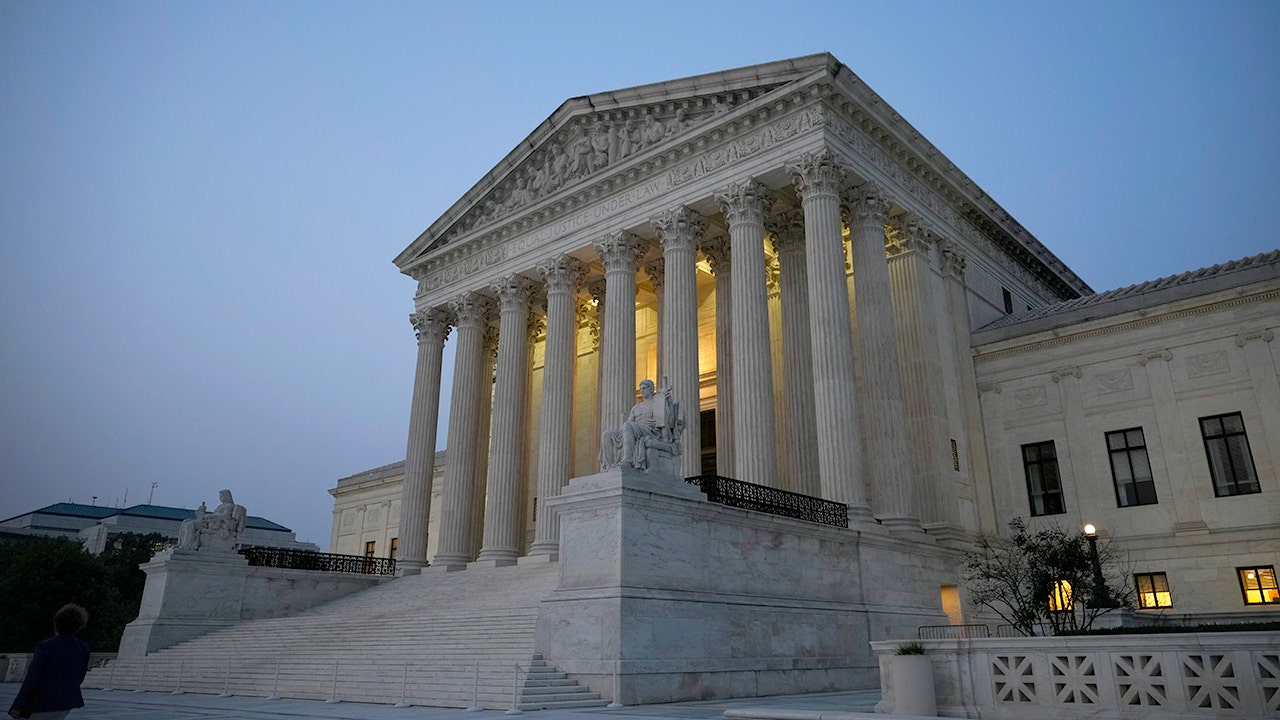
While many are tracking Supreme Court rulings as wins or losses for President Donald Trump, what they should be watching is a broader and more disturbing trend: For several years, and at an accelerating pace this term, the Supreme Court has been seizing power for itself — from the lower courts, from Congress and from the voters. Whichever way it rules for Trump, the court always rules for itself. The Supreme Court, the one branch of government that can’t be voted out, answerable to no one, is making itself the branch that rules all others.
This is Supreme Court authoritarianism, built to outlast any president.
Start with the ruling on birthright citizenship. When Trump loses (though barely; three justices were ready to deny citizenship to children born on U.S. soil) most court-watchers exhale — and miss the danger already taking hold: a high court wresting power from the courts beneath it and the supposedly co-equal branches beside it.
When Trump loses most court-watchers exhale — and miss the danger already taking hold: a high court wresting power from the courts beneath it and the supposedly co-equal branches beside it.
Consider last term’s ruling on nationwide injunctions. What many commentators scored as a win for Trump did far more for the high court. For centuries, courts’ power to fashion a remedy that fits the harm has been flexible by design — it’s what courts do. In Trump v. CASA Inc., the Supreme Court declared that centuries-old power fixed and frozen: A federal court may only order from a short catalog of remedies that the Roberts Court says an English court could award in 1789. In his concurring opinion joined by Justice Clarence Thomas, Justice Samuel Alito warned that the Supreme Court wouldn’t trust lower courts with other long-standing tools as well. Justice Brett Kavanaugh wrote that the Supreme Court itself, not the lower courts or Congress, would be the “ultimate decider” — not just of a remedy for a wrong but of which federal policies take effect nationwide, even while their legality is in doubt.

The Supreme Court is also taking the power to find facts, a power that has long belonged to the lower courts for good reason: The evidence is before them. Higher courts may set those findings aside only for clear error, and almost never do. In Alexander v. South Carolina NAACP, the high court cast that deference aside: A three-judge panel had found, after a nine-day trial, that the state sorted Black voters by race. Yet the justices reweighed the evidence, reversed and chided the lower-court judges for “hurl[ing] accusations at the political branches.” Elsewhere, the Supreme Court overturned a trial court’s factual finding that a public school coach’s prayers were public and coercive, recasting them as private and quiet, weakening the wall between church and state. Last week, it ignored a lower court’s factual finding that the Trump administration had stripped migrants of protected status out of racial prejudice. Now, with no evidence before them, the justices simply find the facts they want.
On Tuesday, the court went further still. Its opinion on transgender athletes didn’t overrule a trial court’s fact-finding — it cut the trial court off before it could even consider the facts of the case. Instead, the justices issued a sweeping general policy from the bench, cloaking the fiat in the language of deference to the legislatures meant to grapple with the hard questions at stake.
As the Supreme Court diminishes other judges’ powers to uphold the rule of law, trial judges across the country are using what they have left to block this administration’s unlawful acts: One ruled this month that the administration could not rename the John F. Kennedy Center for the Performing Arts, saying only Congress can; another blocked a Justice Department plan to create a $1.8 billion settlement fund for the president as unlawful spending. Earlier this year a federal judge ordered deportation flights turned around; they flew anyway.
Without a court to halt it, an unlawful executive order becomes a terminated job, a shuttered clinic, a stalled cancer trial. For the work they are trying to do, many federal judges are targeted. The U.S. Marshals Service recorded 564 threats against federal judges last year, and Trump frequently calls out by name those who rule against him — he branded one a “hater” and another a “Radical Left Lunatic” who “should be IMPEACHED.”

Meanwhile, the Supreme Court is also disarming Congress. Consider: This spring, the Supreme Court struck down Trump’s initial tariffs — a rare time it told the president no. The statute Trump leaned on simply doesn’t let a president tax the whole world’s goods, and the court said so. The words of the law were enough. That’s the normal rule: When Congress writes in plain words, the court must follow them. But some justices went further and sought to change the rule — so that clear words are not enough and the court can ignore Congress whenever it decides the stakes are high.

J. Maria Glover is the Carmack Waterhouse professor of law at Georgetown University Law Center.