GOP clears its first reconciliation hurdle. Now comes the hard part.

Republicans are one step closer to passing their latest reconciliation bill, after the House adopted a budget laying out the spending guardrails for their legislation.
But the vote only cleared the first — and arguably easiest — hurdle. The hard part is still ahead.
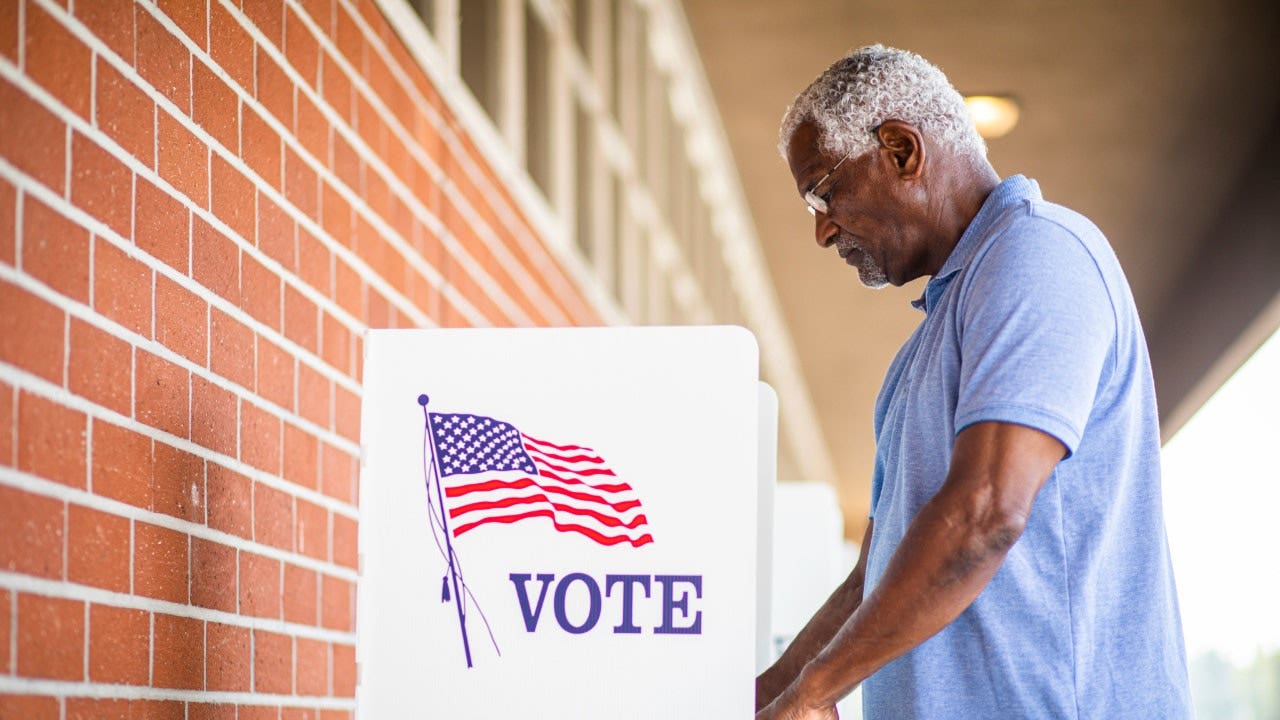
On Wednesday, the House narrowly adopted a budget resolution for the GOP’s third reconciliation measure, a package aimed at funding the war in Iran, providing farm aid and implementing parts of the SAVE America Act, which would require voter ID and proof of citizenship to vote.
After days of arm-twisting and internal GOP debate, the measure barely cleared in a 216-214, with two Republicans and one Independent joining all Democrats in opposition.
No Democrats voted “yes.” Reps. Warren Davidson, R-Ohio, Thomas Massie, R-Ky., and Kevin Kiley, I-Calif., voted “no.”
Senate Republicans now have to adopt their own budget resolution, which they’ll have to reconcile with the House’s blueprint. Then both chambers have to adopt that compromise measure. Only then can Republicans begin writing the actual $95 billion package — before trying to pass it through both chambers.
The most difficult part is shaping up to be getting skeptical Republicans on board. Several GOP senators have raised concerns with provisions included in the plan — and those left out — while questioning the aggressive timeline, making the effort a long shot.
“It’s a very heavy lift in the Senate,” Sen. John Cornyn, R-Texas, said Wednesday.
The issues are piling up. Sen. Bill Cassidy, R-La., has called for spending cuts to be in the package, which is not in the current plan. Sen. Josh Hawley, R-Mo., wants language banning funding for Planned Parenthood, a provision that could alienate GOP moderates. And Sen. Lisa Murkowski, R-Alaska, simply said “I’m not a fan of multiple reconciliations.”
Perhaps the thorniest issue, however, could be the SAVE America Act, which President Donald Trump has made his top priority on Capitol Hill. After several failed attempts to pass the voting bill, Republicans are hoping to include some aspects of the measure in the reconciliation bill — creating a political and procedural minefield.
Logistically, it’s unclear how Republicans will be able to include the bill in their package. The Senate parliamentarian previously said the SAVE America Act isn’t compliant with the strict rules of budget reconciliation, sending GOP leaders back to the drawing board.
Politically, any mention of the SAVE America Act could cost Republicans votes. Sen. Thom Tillis, R-N.C., who’s retiring at the end of the year, told MS NOW his “red line” for reconciliation is the inclusion of the voting bill.
“I won’t say that I’m opposed to it yet, but if anybody is as naive as they were, like Mike Lee, thinking they could implement something as expansive as what he’s proposed with zero budget, then that’ll be DOA,” he said. “Anything like that, they’d never get my support no matter how much I like the rest of reconciliation.”
“It’s a red line for me,” he said.
Adding insult to injury, Senate GOP leadership is showing no interest in prioritizing the undertaking. On Tuesday, Senate Majority Leader John Thune, R-S.D., said the Senate would hold up the reconciliation process until government funding is sorted out.
But with the shutdown deadline not until Sept. 30 — a lifetime by Capitol Hill standards — that’s unlikely to happen any time soon. And between now and the November midterm elections, the House and Senate are scheduled to be in Washington on the same day fewer than 15 times.
The next phase — writing the actual package — will be a difficult task for House Republicans, too. While most GOP lawmakers supported the budget resolution, the real policy fights will come when committees begin drafting the legislation.
For conservatives, that’s bringing down the debt and making sure the strongest version of the SAVE America Act is included.