
VCU nurse placed on leave after posting menacing anti-ICE videos
CITY, State (Fox News) — VCU Health and VCU Police are investigating a nurse who made inappropriate videos about fighting federal law enforcement.
Key Facts:
- Nurse used TikTok account Redheadredemption.
- Nurse suggested using syringes with saline or succinylcholine as a deterrent.
- Nurse recommended infecting others with poison ivy.
- Nurse advised spiking ICE agents’ drinks with laxatives.
- Nurse directed followers to make ICE agents’ lives miserable.
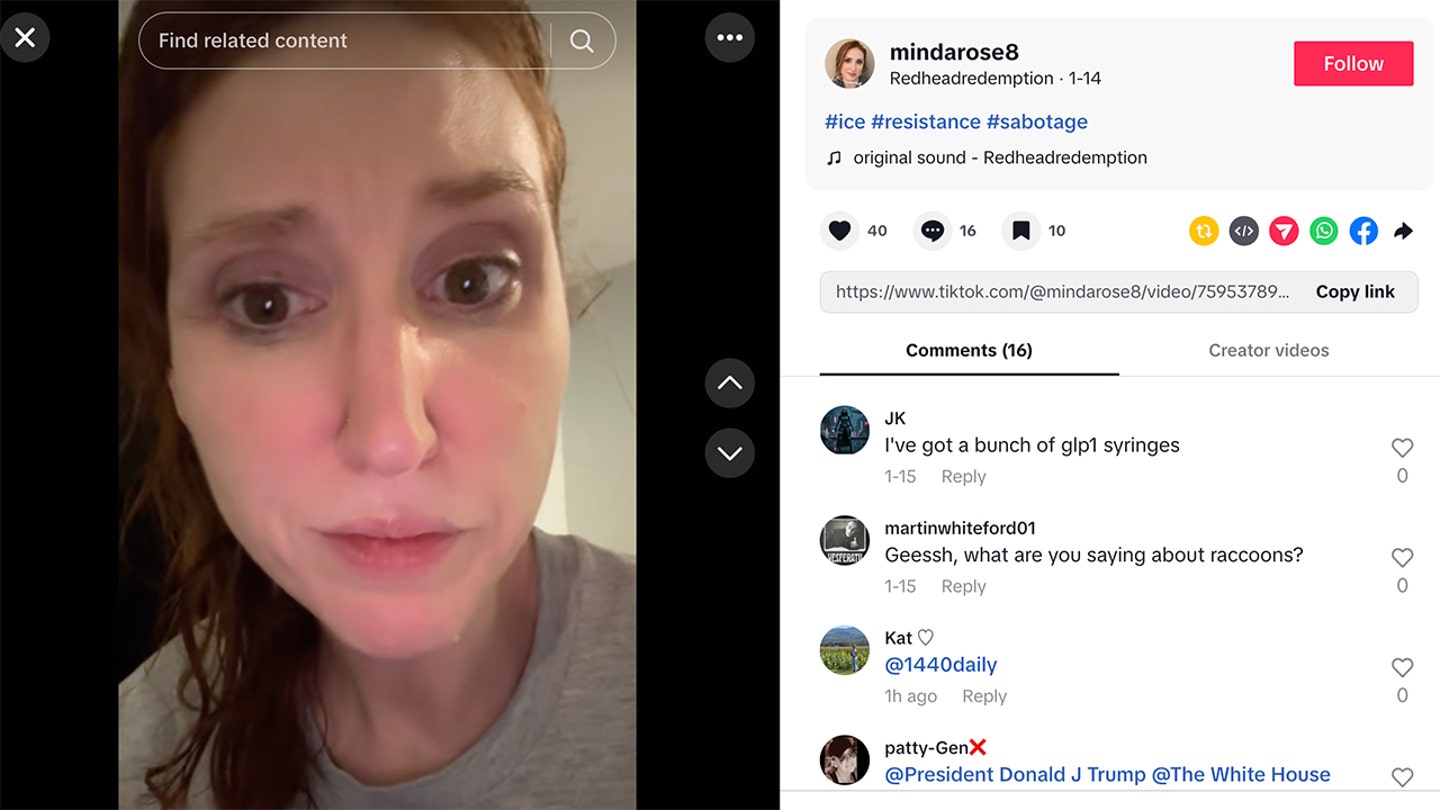
A Virginia Commonwealth University nurse’s TikTok video from January 14, 2025, has gone viral after it was posted by LibsOfTikTok on X. (Credit: @mindarosa8/TikTok)Key Facts:
- Succinylcholine causes rapid muscle paralysis.
- Nurse also suggested using poison ivy to infect others.
- Nurse advised spiking ICE agents’ drinks with laxatives.

ICE agents stand at the scene where a woman was fatally shot earlier in the day during an enforcement operation on Jan. 7, 2026, in Minneapolis, Minnesota. (Christopher Juhn/Anadolu via Getty Images)Key Facts:
- Nurse directed followers to talk to people who know ICE agents’ locations.
- Nurse is on administrative leave during the investigation.

A Border Patrol member pepper sprays observers after getting into a car accident on Blaisdell Avenue on Jan. 21, 2026, in Minneapolis, Minn. (Stephen Maturen/Getty Images) CITY, State (Fox News) — A new study reveals that regular exercise can help reduce the risk of developing Alzheimer’s disease. Researchers found that individuals who engaged in physical activity at least three times a week were less likely to develop the neurodegenerative disorder. The study, published in the Journal of Alzheimer’s Disease, highlights the importance of staying active for brain health.In addition to exercise, the study also emphasized the benefits of a healthy diet and social interaction in reducing the risk of Alzheimer’s disease. Researchers recommend a combination of physical activity, a balanced diet rich in fruits and vegetables, and regular social engagement to help maintain cognitive function and prevent cognitive decline.
The findings of this study provide further evidence of the importance of lifestyle factors in reducing the risk of Alzheimer’s disease. By incorporating regular exercise, a healthy diet, and social interaction into daily routines, individuals can take proactive steps to protect their brain health and reduce their risk of developing this debilitating condition.
Overall, this study underscores the role that lifestyle choices play in maintaining cognitive function and preventing Alzheimer’s disease. Researchers hope that these findings will encourage more individuals to prioritize their brain health and make positive changes to their daily habits to reduce their risk of developing this devastating condition.