
There are no winners in the Folarin Balogun debacle

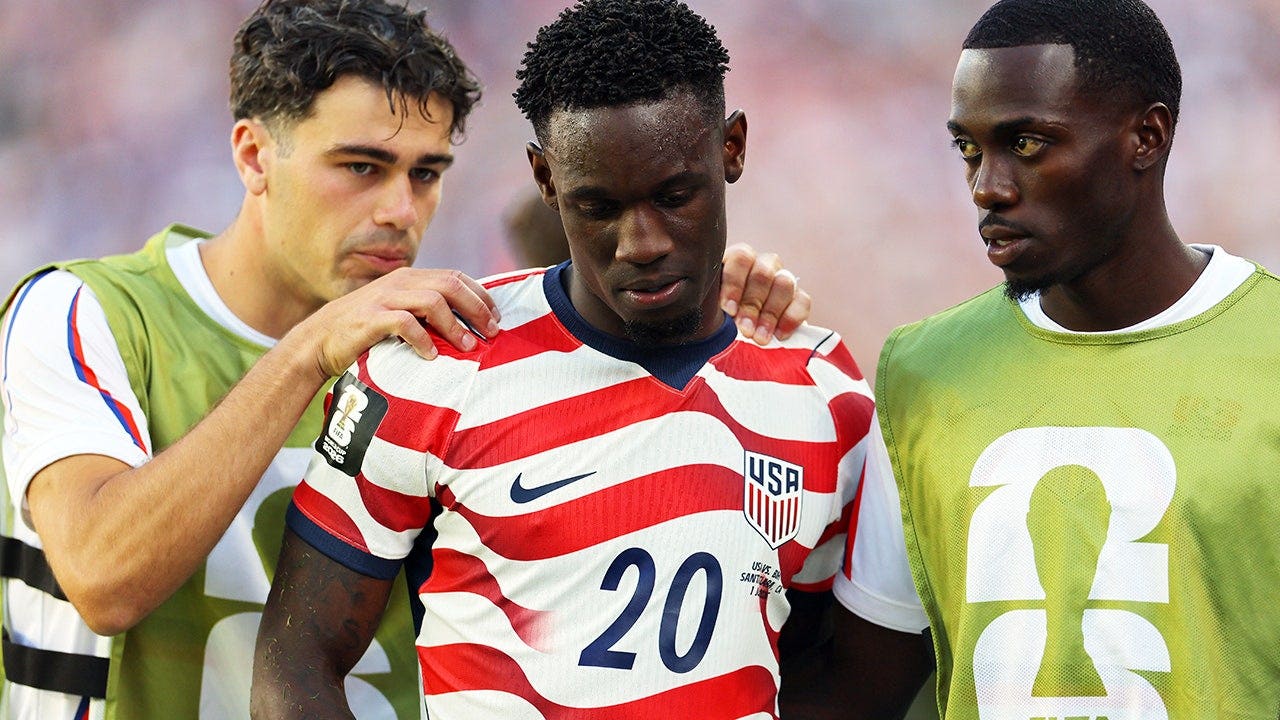
Folarin Balogun is having himself a World Cup. The U.S. Men’s National Team striker has scored three goals in three games to help the Americans reach tonight’s Round of 16 match against Belgium. But after putting the U.S. ahead against Bosnia-Herzegovina on Wednesday, Balogun received a red card, which meant he was suspended for the following game. His absence was the big story heading into tonight’s match, with the U.S. men hoping to reach the World Cup quarterfinals for the first time since 2002.
But over the weekend, Balogun, through no fault of his own, found himself at the center of one of the biggest in-tournament controversies in World Cup history. On Sunday, FIFA stunningly announced that Balogun’s automatic ban would be suspended after an internal review. It is the first time a ban issued during a World Cup has been suspended since 1962 and appears to have come at the behest of American officials, including President Donald Trump.
This is the first time in recent memory that a FIFA ruling has so directly benefited the Americans on the field, and it comes after years of Infantino courting Trump’s favor.
In the aftermath of the Bosnia-Herzegovina game, the U.S. Soccer Federation asked FIFA to rescind the ban, and began exploring legal options. Then Trump got involved. At an Oval Office event Monday, Trump confirmed that he called FIFA President Gianni Infantino about the suspension last week. “I asked for a review because I didn’t think it was a foul,” Trump said, though the president also admitted he did not know what a red card was.
Trump and Infantino both claimed FIFA made the decision independently. But the perceived interference sparked outrage from many fans, analysts and international soccer organizations, all of whom decried the apparent favoritism. Belgium’s federation appealed Balogun’s eligibility, but FIFA denied the challenge.
There are several conflicting factors that make judgment on this story all the more murky. Many analysts and fans felt Balogun’s red card was dubious: The contact was accidental, and the card was only issued after the referee looked at slow-motion and still replays, violating established video review protocols. That said, a bad call affecting a star player on the sport’s biggest stage is hardly unprecedented.

Also not unprecedented: The whiff of corruption and favoritism around FIFA’s decision to postpone the suspension. Neither FIFA nor Trump are strangers to accusations. But this is the first time in recent memory that a FIFA ruling has so directly benefited the Americans on the field, and it comes after years of Infantino courting Trump’s favor.
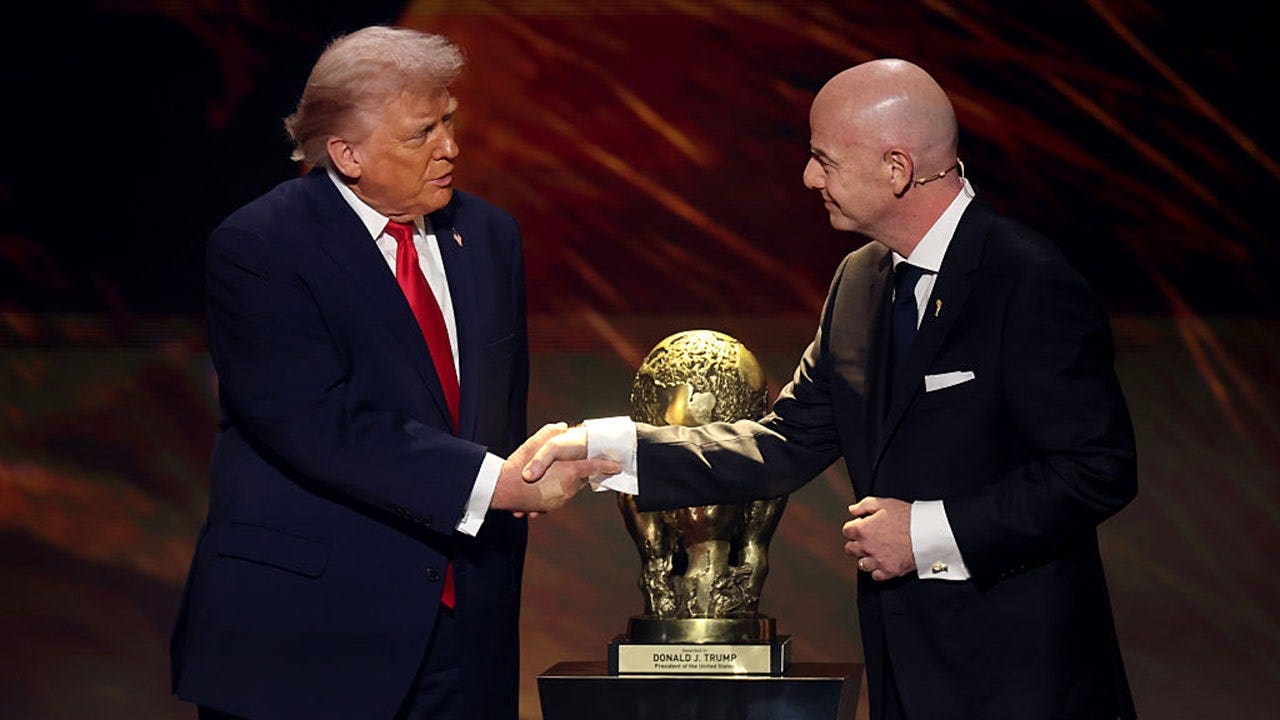
The FIFA president has made regular trips to the Oval Office and Mar-a-Lago, directed his organization to lease a floor in Trump Tower and even awarded Trump the first ever “FIFA Peace Prize.” Even before the tournament began, their relationship drew criticism. At last year’s FIFA congress, European delegates exited to protest Infantino’s prioritization of “private political interests.” Just days ago, 50 members of the European Parliament called for an ethics investigation into Infantino’s ties to Trump.
The U.S. gets its star forward back, but if it wins — and assuming Balogun plays a major role in the match — the victory will come with an asterisk.
The situation is not helped by the infamously opaque association’s lack of transparency in how it came to its decision. Immediately after the match against Bosnia-Herzegovina, FIFA officials told reporters the U.S. would not be able to appeal the suspension. Now, FIFA says the ruling resulted from an independent review by its internal disciplinary committee. But it has not clarified whether it was put to a vote, nor has it released a report on the decision, which it usually does after committee rulings. And in dismissing Belgium’s appeal, FIFA bizarrely claimed that the U.S.’ next opponent “has no standing to appeal the decision.”
Everyone is worse off in this situation, and that includes the U.S. men’s team and American soccer fans, who, to this point, have been able to enjoy an unexpectedly successful tournament. The U.S. gets its star forward back, but if it wins — and assuming Balogun plays a major role in the match — the victory will come with an asterisk. One of U.S. Soccer’s aims for this World Cup was to establish the American men’s program as a serious player on the international stage. Whatever goodwill this team has built up has now been largely chipped away because of the actions of its government and the sport’s governing body.
FIFA very well could have come to this decision without pressure from the Trump administration, and it would have been only slightly less controversial. Before the World Cup started, FIFA was heavily criticized for partially suspending a three-match ban against Portuguese star Cristiano Ronaldo, allowing him to play in the opening two games of the tournament. It is no secret that FIFA wants to keep Americans watching the home World Cup, so it may have been incentivized to allow the USMNT to play with its full roster anyway.

But Trump inserting himself casts a long shadow on this decision in the eyes of many within soccer, including some American fans. Now, he gets to do a victory lap for, at the very least, pushing for the review. His presence in this process also negates much of the goodwill that our nation has built up during this tournament. Not everyone has been treated well, with the logistical restrictions on the Iranian team especially disgraceful. But international tourists are experiencing an America that is not always reflected by our government or our role in geopolitics — a country of Southern hospitality, welcoming cities and ranch dressing. Instead, the actions of this administration have foregrounded the image of a country that can be a bully on the global stage.
And as usual, the people who lose out most here are both the fans and the athletes who have no control over either a faulty VAR process or a highly suspect FIFA review. That includes Balogun, who is now the face of this controversy despite saying and doing everything right since receiving the red card.
On Friday, two days before his suspension was postponed, Balogun told reporters: “I’ve been upset. I’ve been happy. It’s been surreal, to be honest. But for me, I think it was just important to stay calm. I never want to react out of anger and out of emotion. There’s still lots of people we’re inspiring, little kids, boys and girls who are watching, and we have to show them the correct way to handle things even when you think it’s unjust.”
Balogun’s impressive handling of the situation comes with a dose of irony as well: He wouldn’t even be eligible to play for the U.S. if the president’s restrictions on birthright citizenship had been established law.
American fans can take solace in the fact that their players have handled things in the correct way, and should root for their team’s success and the continued growth of the beautiful game within our shores. But this whole situation is a reminder that the World Cup is never just about soccer — and there is nothing this president cannot ruin by making it about himself.

Kavitha A. Davidson
Kavitha A. Davidson is an Emmy-winning sports journalist from New York. She was most recently a correspondent on HBO’s “Real Sports with Bryant Gumbel.” She was previously a reporter and columnist at ESPN, The Athletic, and Bloomberg.