Iran’s ruling ideology driving global confrontation, analysts say
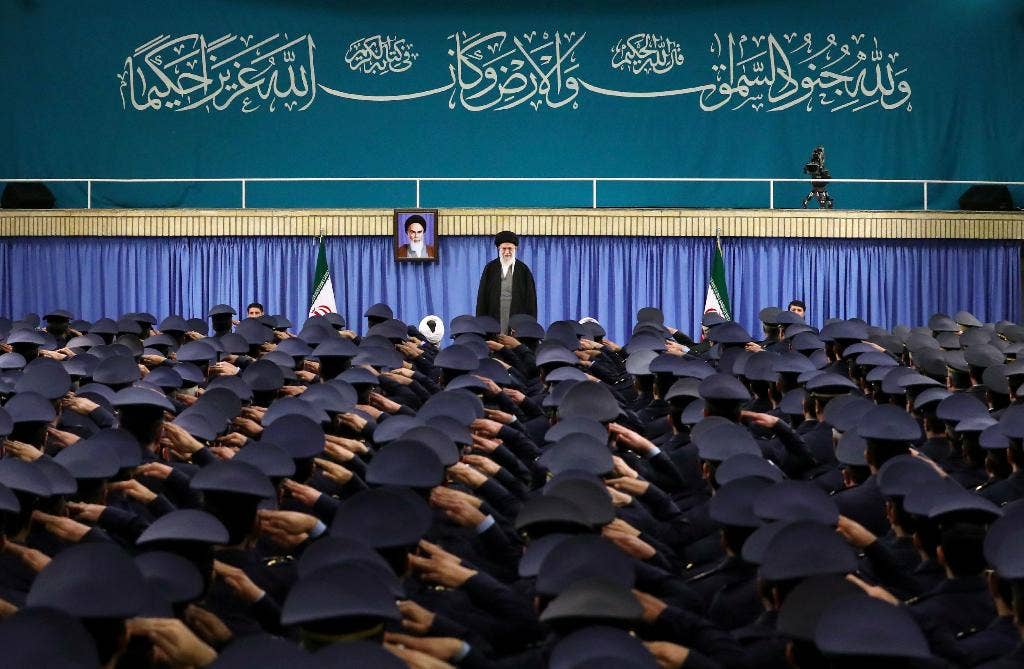
15, 2018. (Office of the Iranian Supreme Leader via AP)
The future of Iran’s ideology
As Iran faces domestic unrest and international pressure, questions remain about how sustainable this ideological framework is.
Some analysts argue that as the regime faces more challenges, it may double down on its radical beliefs.
"As Iran’s regional position weakens, it may try to compensate by pushing harder on its ideological agenda," said Michael Rubin, resident scholar at the American Enterprise Institute.
IRAN’S NUCLEAR DEAL NEGOTIATORS: WHO THEY ARE AND WHAT THEY WANT
Others say that the system’s absolutism may leave it vulnerable.
"The irony is that while the ideology offers the regime a sense of invincibility, it can also become a liability," said Daftari. "If you see your rule as divinely ordained, you might not be inclined to make pragmatic concessions when you’re in trouble. That can make crises harder to resolve."
For Ghadimi, the question is not just how Iran’s leaders view themselves, but how their ideology shapes the world’s perception of them.
"They see themselves as the leaders of a global Islamic Revolution, but as their actions show, they are just a band of criminals who have no respect for human rights," he said.
"They have a worldview that is not based on reality, but on conspiracy theories and paranoia," he added. "And as long as they remain in power, the world will continue to be in danger."
CLICK HERE TO GET THE FOX NEWS APP
Summary: The article discusses how Iran’s ruling ideology is not just political but deeply rooted in religious absolutism, messianic expectations, and a worldview that allows little room for compromise. The belief in the Mahdi, a messianic figure in Shiite Islam, plays a central role in Iran’s political system, positioning the supreme leader as his caretaker. Critics argue that this religious dimension makes it challenging to challenge political authority. The article also highlights how Iran’s ideology shapes its actions on the global stage and may lead to further confrontation with the West. ## Iran’s ruling ideology driving global confrontation, analysts say
In a world where violence can take on religious meaning, Iran’s messianic belief and absolutist ideology drive a system of confrontation that is not only expected but justified. Critics argue that this belief system shapes Iran’s behavior both domestically and internationally, creating a cycle of hostility that may be difficult to break.
⚡ Key Facts
- The Core: Iran’s ruling ideology, rooted in a blend of religion, power, and mission, drives confrontational policies at home and abroad.
- The Breakdown: Messianic belief and absolutist ideology fuel a system where violence is seen as divinely rewarded.
- The Impact: The challenge for policymakers lies in understanding and addressing the ideology that drives Iran’s actions on the global stage.
🔍 The Deep Dive
Why it’s happening: Iran’s ruling ideology, which combines religious fervor with a sense of mission, leads to policies of repression and confrontation. This belief system shapes Iran’s behavior and drives its actions on the international stage. [Source: Fox News]
From one perspective: Advocates for change suggest that Iran’s confrontational stance is rooted in a dangerous blend of religious fervor and power, leading to potential long-term resentment and hostility. They argue that understanding and addressing Iran’s ruling ideology is crucial for promoting peace and stability. [Source: Fox News]
On the other hand: Critics maintain that Iran’s messianic belief system justifies violence and confrontation, creating a cycle of hostility that may be difficult to break. From a fiscal standpoint, the economic and social costs of these policies could lead to long-lasting consequences for Iran and the region. [Source: Fox News]
🏁 The Bottom Line
As Iran’s ruling ideology continues to drive global confrontation, policymakers must not only focus on negotiation but also on understanding the underlying beliefs that shape Iran’s behavior. The challenge lies in addressing the structural features of Iran’s ideology and finding ways to promote moderation within the system. Watch for how this dynamic plays out in future international relations. Iran’s ruling ideology, a combination of a holy mission and messianic doctrine, is driving global confrontation and extremism, according to analysts.
The ideology, rooted in the teachings of Shiite Islam, plays a significant role in shaping Iran’s foreign policy and its actions in the Middle East. It is based on the belief that Iran has a divine mission to spread its version of Islam and establish an Islamic government across the region.
This ideology is closely linked to the concept of the "Hidden Imam," a messianic figure in Shiite Islam who is believed to be in occultation and will one day return to establish justice and peace on Earth. This belief fuels the regime’s sense of messianic duty and justifies its actions as part of a larger divine plan.
Iran’s ruling ideology has led to confrontations with the United States and its allies, as the regime sees itself as a counterbalance to Western influence in the region. The regime’s support for militant groups like Hezbollah and Hamas is seen as part of its mission to confront what it perceives as Western imperialism.
Analysts warn that this ideology is driving Iran towards dangerous confrontations with its neighbors and the international community. The regime’s pursuit of nuclear weapons and support for terrorist groups has raised concerns about the stability of the region and the potential for a wider conflict.
As Iran’s ruling ideology continues to shape its actions on the global stage, analysts stress the importance of understanding its motivations and beliefs in order to effectively address the challenges posed by the regime. Only by engaging with Iran on a deeper level can the international community hope to mitigate the risks of further confrontation and extremism.