Iran’s Hormuz deal with Oman has Trump poised for the big surrender

Iran and Oman are reportedly finalizing a deal to control the Strait of Hormuz, charging ships fees for passage, and potentially blocking ships from “hostile countries.” Trump resumed bombing in early July to prevent Iran from doing just that, and President Donald Trump has flitted between claiming the United States will control Hormuz and charge tolls, pretending the strait is already open and threatening to “hit very hard” if Iran doesn’t fully open it soon.
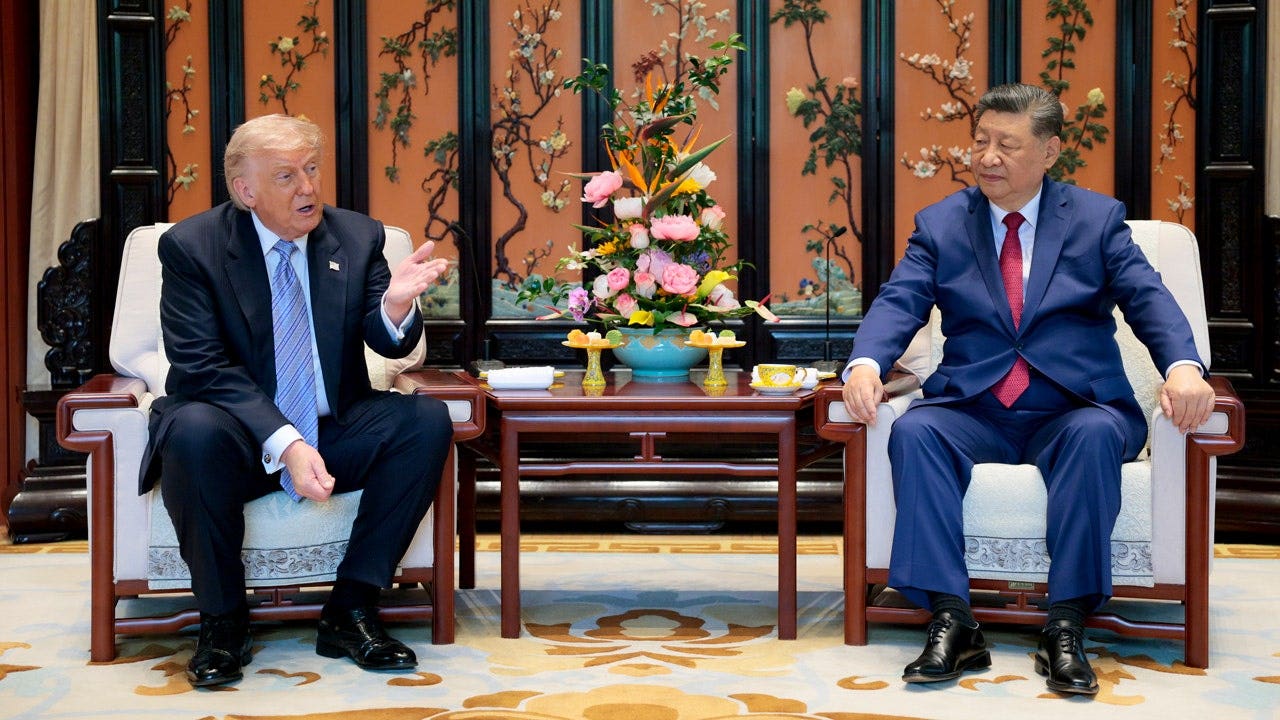
Yet Trump and other top U.S. officials, such as Secretary of State Marco Rubio and Treasury Secretary Scott Bessent, are touting the Iran-Oman talks as diplomatic progress, indicating they’re going to accept a deal on Iran’s terms.
This would arguably be America’s most blatant loss in war ever, especially for a war the U.S. started.

In February, before Trump started the war, Hormuz was open, treated as an international waterway, free to all. The U.S. was widely considered the dominant military power in the region. Gulf Arab states — Saudi Arabia, the United Arab Emirates, Qatar, Bahrain, Kuwait — made U.S. dominance the basis of their national security and economic strategies. And Iran was engaged in talks over its nuclear program, albeit unlikely to make significant concessions.
On June 17, after a lot of bombing, some extreme threats and a couple of ceasefires, the U.S. signed a memorandum of understanding with Iran that was mostly an American surrender. The deal front-loaded sanctions relief and other economic benefits for Iran, and punted on all U.S. war aims. Iran agreed to nonspecified nuclear talks in the future, which the U.S. had before attacking. The written document requires both parties not to threaten each other (Trump violated that almost right away) and committed Israel to end operations in Lebanon (which they never agreed to, and wouldn’t). It effectively acknowledged Iranian control over the Strait of Hormuz, saying Iran would “make arrangements” to manage it with Oman, and wouldn’t charge any fees “for 60 days only.”
But Hormuz did partially open, with daily crossings the highest in months (though still not to prewar levels). Oil prices dropped.
But the U.S. acted as if it was following a different deal in Trump’s imagination.
This would arguably be America’s most blatant loss in war ever, especially for a war the U.S. started.
Besides breaking the MOU with threats, Trump repeatedly lied about its contents, falsely claiming Iran made nuclear concessions, opened Hormuz and gave the U.S. “just about everything.” With U.S. encouragement, some ships transited Hormuz outside Iranian waters, hugging Oman’s coast. Then Iran shot at a few to assert control.
So Trump started bombing again. Again, Iran blocked the strait and fired missiles and drones at U.S. regional partners, hitting civilian infrastructure, U.S. bases and other targets.
Now that this round appears over, it’s clear Trump worsened America’s position, failing to achieve any of his goals and strengthening Iran’s hand.
The U.S. used up even more precision attack missiles and air defense interceptors, creating shortages. That limits America’s capabilities, encourages U.S. adversaries and — due to production bottlenecks — won’t be easily solved.
Iran again showed it can attack ships around Hormuz, despite U.S. efforts to prevent it. Now Iran has Oman — which was working with the U.S. before Trump restarted bombing — on board with its plan to control the strait. Even at the low end of proposed tolls, 3% per ship, Iran would gain tens of billions of dollars in annual revenue.
The war widened, with Iran-backed militias getting more involved. Iraqi groups fired drones into Saudi Arabia, and the U.S. and Saudis launched airstrikes in Iraq. The Yemen-based Houthis are firing at Red Sea shipping and into Saudi Arabia. The Saudis are reportedly planning an offensive against them.

Saudi leader Mohammed bin Salman reportedly urged Trump against a larger attack on Iran, shifting under Iranian threat from his earlier pro-war stance. That implies the Saudis are begrudgingly open to paying tolls to their rival Iran. It’s a serious vote of no confidence in the U.S.-led regional security architecture — a sentiment likely shared in other Arab capitals.
And U.S. troops took additional casualties, bringing the total from the war to 18 killed and more than 600 injured.

Nicholas Grossman is a political science professor at the University of Illinois, editor of Arc Digital and the author of “Drones and Terrorism.”