Why a judge is suppressing some evidence in Luigi Mangione case
The judge presiding over Luigi Mangione’s New York state murder case in the 2024 shooting death of healthcare executive Brian Thompson issued an important pretrial ruling Monday. The mixed decision blocks state prosecutors from presenting certain evidence but allows other key items, such as a gun allegedly used for the fatal shooting as well as a notebook with allegedly incriminating writings.
As for the ruling’s broader implications, it should not stop Manhattan District Attorney Alvin Bragg’s office from making its case against Mangione, who has pleaded not guilty in this case as well as in his separate federal case, where the judge previously rejected his similar suppression motion. Prosecutors must prove the charges beyond a reasonable doubt if the cases go to trial.
Given the high-profile nature of the prosecution and the passion it provokes both for Mangione’s supporters, who have hailed him as a folk hero, and people who think murder is unwarranted no matter the victim’s profession, jury selection will be especially important. The state trial is scheduled to go first, in September.
Monday’s ruling dealt only with the question of what alleged evidence and statements made by Mangione can be presented by state prosecutors to the jury — and what cannot.
Thompson was fatally shot in midtown Manhattan on Dec. 4, 2024, and Mangione was arrested at a McDonald’s in Altoona, Pennsylvania, five days later. Officers first removed some items from his backpack at the McDonald’s and then other items later at the police station.
That distinction of location and type of search was crucial to Judge Gregory Carro’s suppression ruling, because they involved different legal circumstances that called for applying different rules. The backdrop is the Fourth Amendment to the Constitution, which prohibits unreasonable searches and seizures, as well as New York’s state Constitution, which provides even broader protections.
Applying those charters and relevant precedents, the bottom line from Carro’s ruling is that he decided the McDonald’s search was improper while the subsequent search at the station was proper.
Carro wrote that evidence found during the search of Mangione’s backpack at McDonald’s must be suppressed, including a loaded magazine, cellphone, passport, wallet and a computer chip. The judge noted that “exigent” circumstances are required to search closed containers, such as backpacks, when officers make arrests. To invoke that emergency exception, the property must be within the suspect’s “immediate control” or “grabbable area,” and officers must act in furtherance of safety and protecting evidence from destruction or concealment.
But the judge reasoned that the authorities didn’t satisfy those requirements at the McDonald’s, because the backpack wasn’t within Mangione’s immediate control or “grabbable area” at the time of the arrest and search.
Yet, Carro declined to suppress other evidence that was later recovered during an “inventory search” at the station. Such searches, conducted pursuant to police departments’ standardized procedures, are supposed to be done for the purpose of safeguarding property — thus producing a list or “inventory” of property found — rather than searching for evidence of crimes.
Recommended

Jordan Rubin is the Deadline: Legal Blog writer. He was a prosecutor for the New York County District Attorney’s Office in Manhattan and is the author of “Bizarro,” a book about the secret war on synthetic drugs. Before he joined MS NOW, he was a legal reporter for Bloomberg Law.
Latest Post

Related Posts











More in US News







Top Stories

Bright Side: May 18, 2026

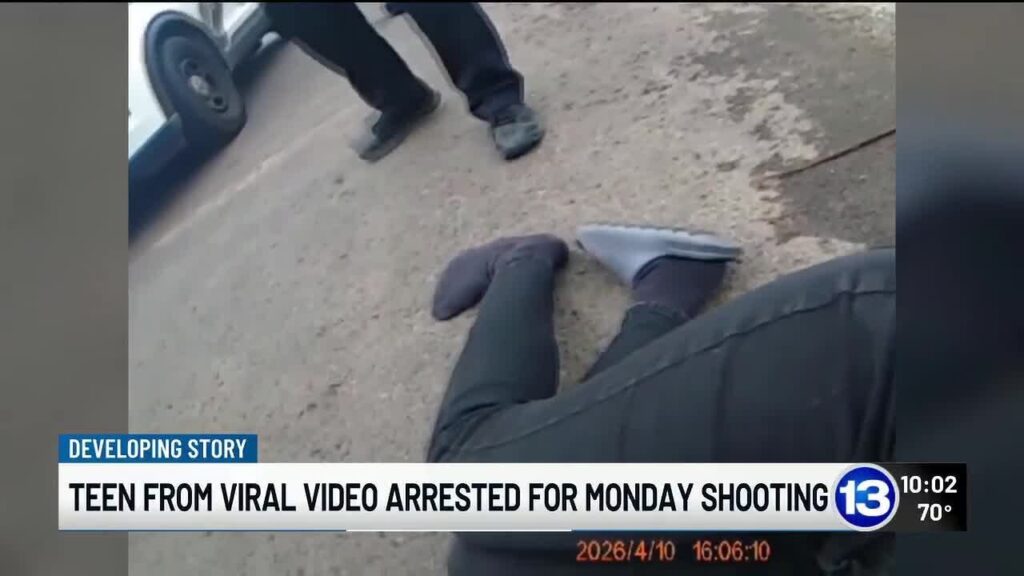
Toledo girl at center of controversial arrest video arrested Monday in shooting case

Idaho Gov Brad Little defeats crowded GOP primary field in third-term bid


Local taxi owner is living her dream and hoping to inspire others

How Trump survives blunders through repetition and message discipline



Trump-Xi summit raises caution as Xi pushes aggressive Cold War 2.0 stance
Toledo woman says mouse infestation persists despite pest control visits at Southgate Woods apart…

Toledo educator uses football to teach life skills at free youth camp