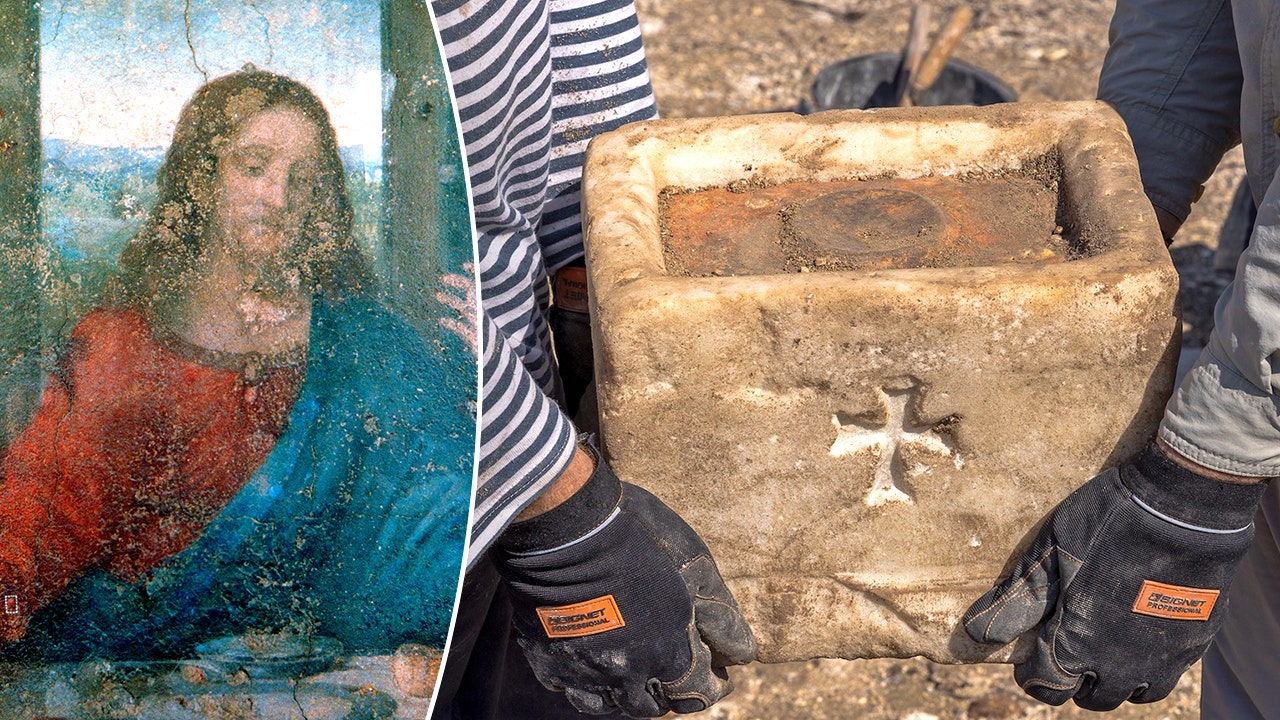
1,400-year-old artifact near Sea of Galilee may rewrite baptismal history
1,400-year-old artifact near Sea of Galilee may rewrite baptismal history
In a groundbreaking discovery near the Sea of Galilee, archaeologists have unearthed a 1,400-year-old artifact that could potentially reshape our understanding of early Christian baptism practices. Found in the ancient city of Hippos, this unique artifact sheds light on a previously unknown stage of the baptismal rite, offering new insights into the rituals of early Christians.
⚡ Key Facts
- The Core: A 1,400-year-old artifact discovered in Hippos may reveal new details about early Christian baptism practices.
- The Breakdown: The artifact, found in a baptismal hall, consists of a rectangular block with three hemispheric cavities, possibly used for a threefold baptismal immersion ceremony.
- The Impact: This discovery has the potential to rewrite the history of baptismal rituals in the early Christian world.
—
🔍 The Deep Dive
Why it’s happening: The recently uncovered artifact in Hippos has the potential to fill a significant gap in our knowledge of early Christian baptism practices. The artifact, with its unique design and purpose, offers a rare glimpse into the ceremonies conducted in the Byzantine Christian community of Hippos. Link to the original report for more details.
From one perspective: Advocates for change suggest that this discovery could lead to a reevaluation of the historical practices and traditions of early Christians. By studying artifacts like this, we can gain a deeper understanding of the cultural and religious significance of baptism in that period.
On the other hand: Conversely, critics maintain that while the discovery is intriguing, it may not necessarily rewrite the entire history of baptism. They argue that more evidence and research are needed to fully grasp the implications of this artifact on our understanding of early Christian rituals. Link to the source for diverse perspectives.
🏁 The Bottom Line
As archaeologists continue to analyze and study this significant artifact, it will be interesting to see how it shapes our understanding of early Christian baptism practices. Keep an eye on further research and discoveries in this field as we delve deeper into the history of this ancient ritual. Archaeologists have recently uncovered a 1,400-year-old Christian artifact near the Sea of Galilee that may potentially rewrite the history of baptism. The artifact, which is a small stone chest with a cross carved on its lid, was found in the ruins of a Byzantine-era church near the Jordan River.
This discovery is significant because the Jordan River is believed to be the site where Jesus was baptized by John the Baptist. The artifact may provide new insights into the early Christian practices of baptism and how they evolved over time.
According to Yotam Tepper, the archaeologist leading the excavation, the artifact is unique and has no known parallel. It is believed to have been used in a baptismal ceremony, possibly as a container for holy water or oil.
The discovery of this artifact sheds new light on the history of Christianity in the region and its connection to the biblical events that took place near the Sea of Galilee. Further research and analysis will be conducted to fully understand the significance of this find and its implications for the study of early Christian practices.