
Trump’s financial disclosure shows his corruption hitting a new low

As former White House ethics lawyers who served administrations of both parties, we upheld a clear bipartisan norm: presidents and senior officials must avoid even the appearance that official power could be entangled with personal gain. Presidents and senior officials were expected to divest conflicting assets, use blind trusts, or hold broadly diversified funds – all to avoid the mingling of their public office and their private interests.
Donald Trump has shattered that principle. His most recent financial disclosure reveals an extraordinary $2.2 billion in gains during his first year in office. The sheer scale of the sums—$1.4 billion in crypto currency alone—is unparalleled. The issue is not simply how much money Trump made or that he made it at all; it is that the money comes from industries his administration regulates, foreign relationships his administration oversees, and markets that can rise or fall based on the policies, enforcement decisions, diplomatic relationships, and public signals of the office he holds.
Unlike Trump, most Americans cannot afford to hedge their bets through the buying and selling of oil company stocks.
Not surprisingly, the White House says there are no conflicts of interest, and Trump himself claims an independent firm handles his investments. But the truth is that Trump is financially capitalizing on the presidency in a way never before seen in American history.
The clearest example is cryptocurrency, where his personal financial interests overlap with his administration’s regulatory decisions, market signals, and foreign relationships. Since returning to office, Trump’s administration has moved toward a more permissive approach to digital assets. Meanwhile, Trump and his family maintain significant financial interests in that industry. His administration has promoted the United States as a crypto hub, supported new stablecoin rules, and moved away from aggressive enforcement against major crypto firms. Through regulation, enforcement decisions, stablecoin policy, and public signals from the White House, the president can influence the rules and market confidence around assets from which he personally benefits.
Woefully inadequate regulation means he is leaving American investors exposed to crypto scams, and a market of volatile, speculative assets that can collapse as quickly as they surge. Trump’s own meme coin shows the danger. The president can benefit from the attention and trading activity generated by his name while retail investors are left exposed when the price falls. The official Trump ($TRUMP) meme coin is down 97.7% from its all-time high; according to one analysis, nearly a million investors have lost $3.8 billion on the coin. Meanwhile, Trump banked $636 million in revenue from the venture.

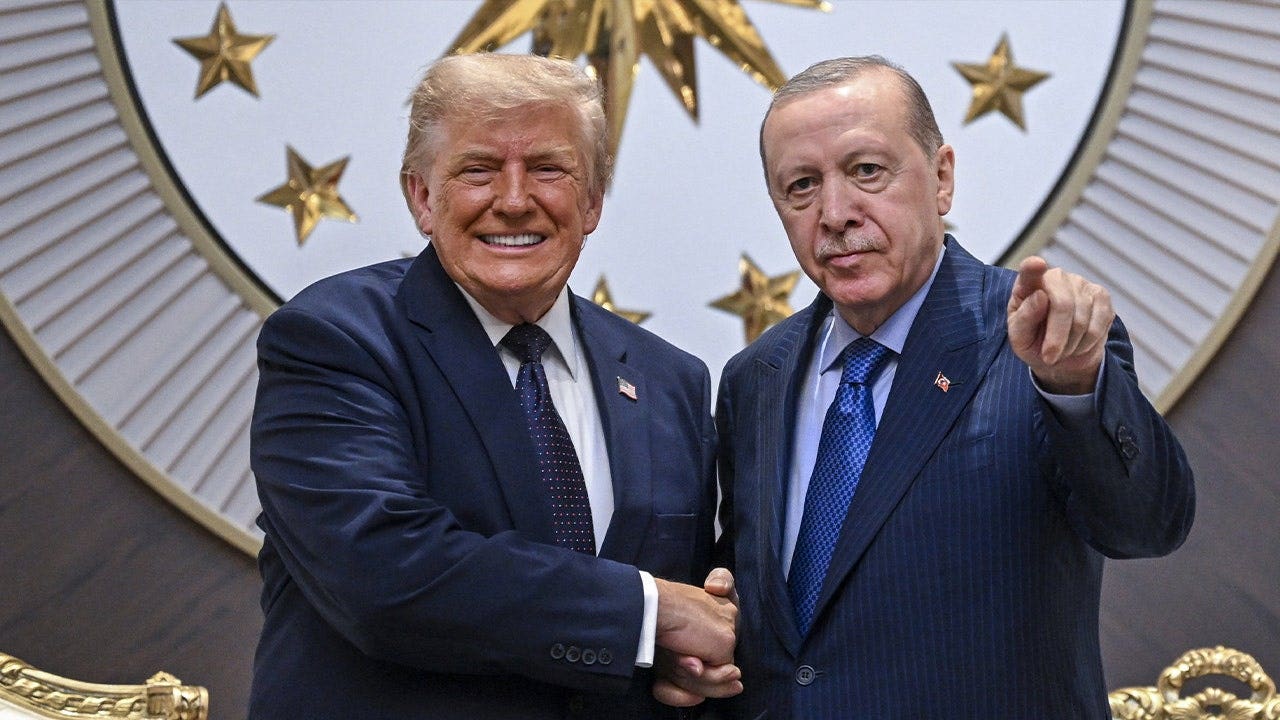
The foreign conflicts are just as alarming. The shadowy nature of crypto transactions makes it difficult to understand all that is happening behind the scenes. But what we are seeing is shocking enough. To pick but one example: In early 2025, World Liberty Financial, a Trump family-backed crypto venture, issued USD1, its stablecoin pegged to the dollar. Within weeks, UAE-owned investment fund MGX used USD1 in connection with a $2 billion investment in crypto company Binance. (The Trump family, World Liberty and Binance deny wrongdoing.) Stablecoins can generate income through the reserves that back them, meaning wider use of USD1 may benefit World Liberty.
In other words, a foreign power—a key player in an unpopular and expensive war with Iran that Trump began without the consent of Congress—is financing a business venture that is partly owned by our president and his family. Ordinary Americans pay for this war with sky-high gas prices. Unlike Trump, most Americans cannot afford to hedge their bets through the buying and selling of oil company stocks.
Congress has both the power and responsibility to act.
No president ever has had these kinds of business dealings, let alone with foreign governments, since our nation’s Founding. In fact, the Founders included a clause prohibiting foreign emoluments in our original Constitution specifically to prevent this type of corruption. During Trump’s first term, we and others warned that these protections exist because financial dependence can distort judgment, compromise foreign policy, and entangle the nation in decisions made for private benefit.

Richard W. Painter
Richard W. Painter was the chief White House ethics lawyer from 2005 to 2007 under President George W. Bush. He is the S. Walter Richey Professor of Corporate Law at the University of Minnesota and is a graduate of Harvard College and Yale Law School.
Norman Eisen
Norman Eisen is a co-founder and board member of Democracy Defenders Action and publisher of The Contrarian. Eisen previously served as a U.S. ambassador and in senior White House and congressional staff roles.
Virginia Canter
Virginia Canter is chief anticorruption counsel for Democracy Defenders Fund and former chief ethics counsel for Citizens for Responsibility and Ethics in Washington (CREW).