The Drug-Resistant Fungus No One Talks About — And the Toledo Scientists Fighting It

When a fungal infection turns serious, doctors don’t have many weapons to reach for — and the ones they do have are starting to fail. Now two University of Toledo scientists are working on a brand-new one.
Dr. Heather Conti and Dr. Ronald Viola, both in UToledo’s College of Natural Sciences and Mathematics, are developing a new category of drug targeting Candida, the fungal genus behind infections that range from everyday thrush to life-threatening illness. Their work is backed by more than $215,000 from the National Institute of Allergy and Infectious Diseases, part of the National Institutes of Health.
The stakes are bigger than most people realize. The Centers for Disease Control and Prevention attributes roughly 7,300 deaths, 130,000 hospitalizations, and 13 million outpatient visits each year in the United States to the fungal species Conti studies. And as strains of Candida and Aspergillus develop resistance to the drugs currently available, that relatively small medicine cabinet is getting even smaller.
“For immunocompromised patients, fungal infections can be life-threatening,” Viola said. “And as these strains become more drug resistant, even people with intact immune systems are starting to experience life-threatening infections.”
What makes the UToledo approach different is the mechanism. Most current antifungal drugs work by interfering with cell-wall synthesis. Conti and Viola are targeting an essential enzyme in Candida with a covalent drug — one that binds irreversibly to its target, a fundamentally different mode of action. Covalent drugs aren’t new (penicillin is one), but they’re drawing renewed interest in drug discovery precisely because resistant strains haven’t learned to dodge them yet.
Conti, a professor in the Department of Molecular, Cellular and Developmental Biology and an associate dean of the college, specializes in how the body fights Candida albicans, the species behind oral thrush. Viola, a Distinguished University Professor emeritus in chemistry and biochemistry, brings deep expertise in the enzyme at the heart of the project. Together with a postdoctoral researcher, they’re working in Wolfe Hall to optimize a class of compounds into more potent enzyme inactivators.
Under the two-year NIH grant, the team will build the foundation for further research — and, eventually, for drugs that could save the lives of patients fighting infections today’s medicines can no longer beat. Undergraduate and graduate researchers are part of the team, too, getting hands-on training at the bench.
“As the threat of fungal infections grows, the hands-on training we provide these students at the bench will help ensure the next generation of clinicians and scientists are well equipped to diagnose and successfully treat these serious infections,” Conti said.
Read the full announcement from UToledo News.
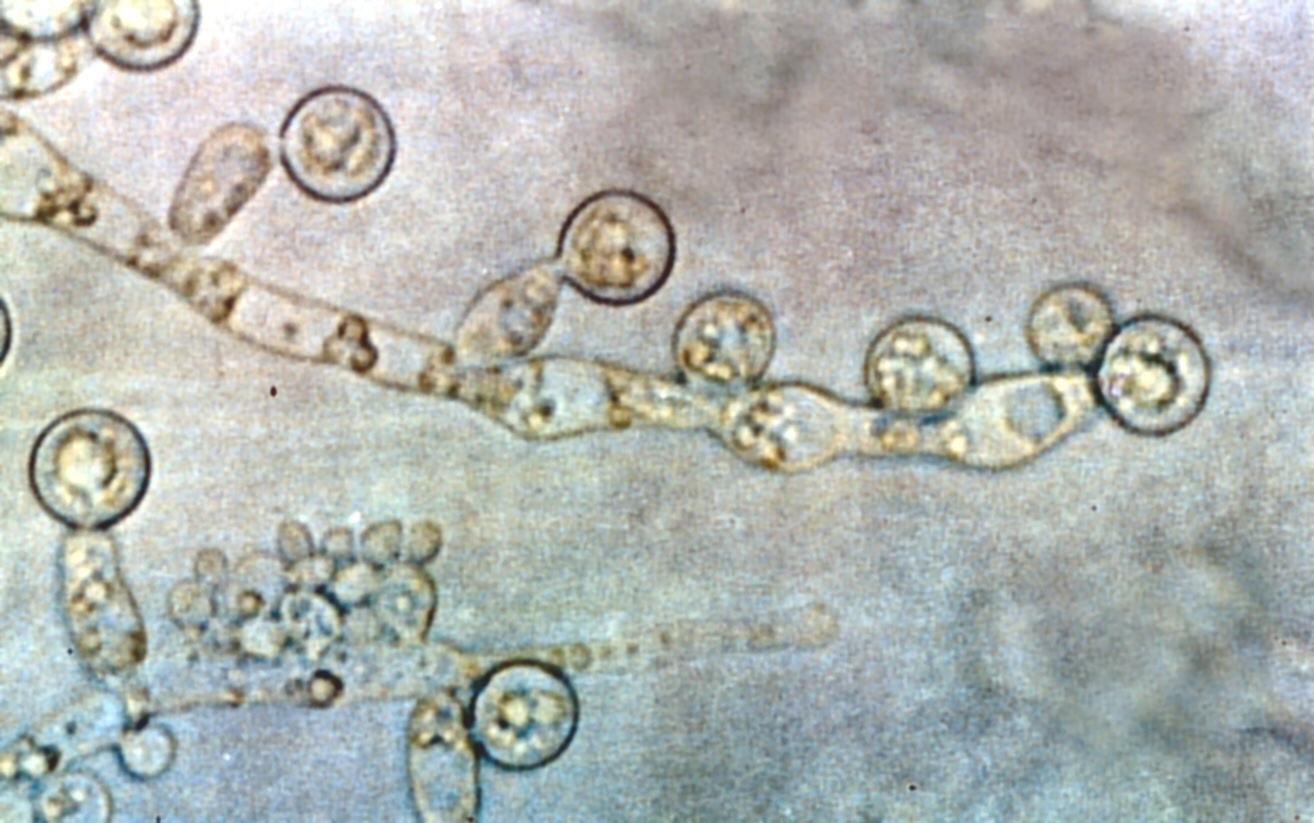
Candida albicans under the microscope. Photo: Wikimedia Commons