NTSB: Learjet That Killed 9 Was Breaking Apart Before It Hit the Ground

WEST PALM BEACH, Fla. — The National Transportation Safety Board held its first media briefing Monday at 1:00 p.m. ET on the Learjet 60 crash that killed all nine people aboard the plane Sunday, laying out new facts about the doomed flight while cautioning that a final determination of cause is a long way off.
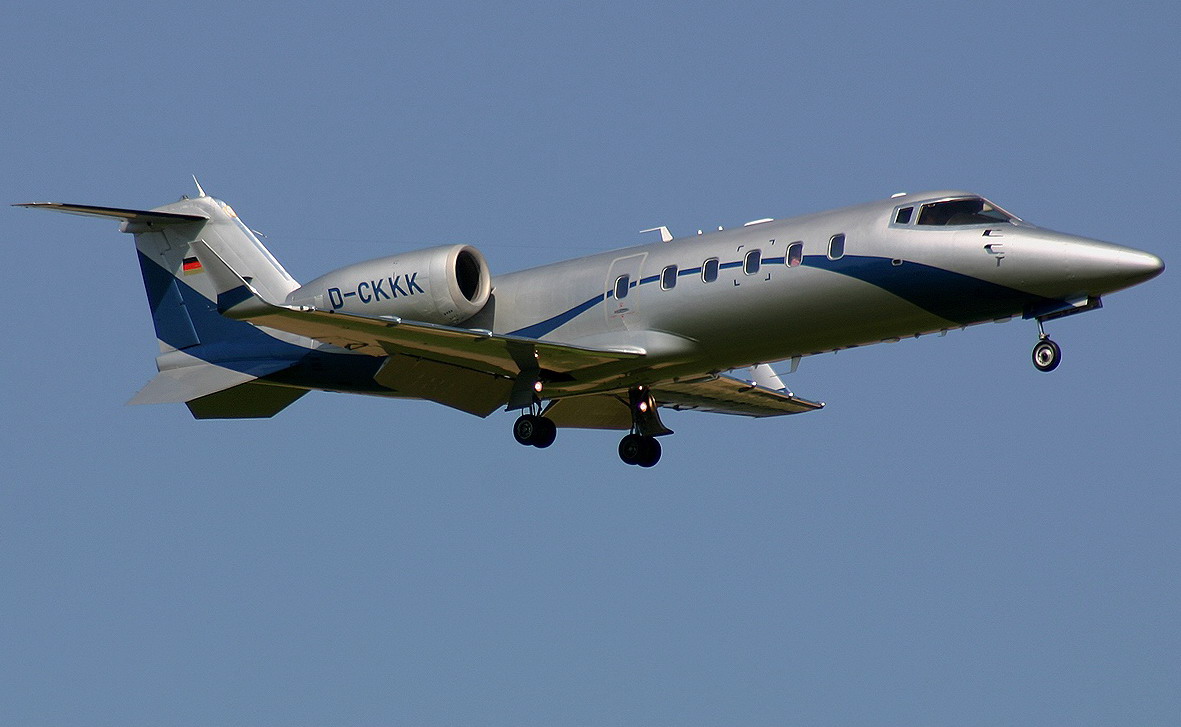
File photo of a Learjet 60 (Lars Henseleit, public domain via Wikimedia Commons).
The most striking new detail: the aircraft was breaking apart before it hit the ground.
“We do have evidence that there was some breakup of the aircraft before impact,” NTSB Member Tom Chapman said. Investigators would not say which parts of the Learjet separated in flight or why.
Lead investigator Tim Monville and Chapman briefed reporters on what the NTSB knows so far:
- The flight was a paid charter operated by Aurora Jet — an operator name that had not previously been reported — carrying two crew members and seven passengers from Austin to North Eleuthera in the Bahamas.
- Investigators are still hunting for the cockpit voice recorder. Records show the aircraft had a CVR “at some point,” but the NTSB said it does not yet know whether one was still on board at the time of the crash.
- The timeline: the Learjet departed Austin at 10:37 a.m. ET. At 12:47 p.m., the crew reported light, clear ice and moderate turbulence at 35,000 feet (−47°C), bouncing ±700 feet. They requested a climb to 37,000 feet, which air traffic control approved. Then came the mayday: the jet was descending between 8,000 and 20,000 feet per minute in an overspeed condition.
- On the ground: a man driving away from the area suffered a leg injury — the first confirmed ground injury. Debris fell across ball fields and people’s homes, roughly 600 residents were displaced, and recovering the main wreckage from the roadway crater will be a “major challenge,” investigators said.
- Co-pilot Nathalia Gadelha Filgueiras, 20, of the Boca Raton area, was identified by family members. She earned her pilot’s license at 17. The other victims have not been publicly named; the NTSB said identifying victims is up to local authorities.
- Weather is a “major focus” of the investigation, Chapman said, adding that investigators need to determine “who knew what when.” A preliminary report usually comes within about 30 days; a final cause often takes one to two years.
The plane was a Learjet 60, tail number N722BD. The NTSB did not speculate on a cause of the crash.
As ToledoBuzz reported this morning, the pilot’s last word on the radio was “overspeed” — a dispatch that previewed the details released at today’s briefing.
Sources: The Contrail‘s live recap of the briefing; USA Today; Aerospace Global News.