UToledo Just Won $2.4M to Crack the Mystery of Male Infertility

The University of Toledo just landed about $2.4 million from the National Institutes of Health to tackle a question that affects millions of families: why some sperm cannot do their job.
Dr. Tomer Avidor-Reiss, a professor in UToledo’s College of Natural Sciences and Mathematics, received the five-year award from the NIH’s Eunice Kennedy Shriver National Institute of Child Health and Human Development. His team will study centrioles — tiny structures inside sperm — and test his “spermatozoa head-kinking” hypothesis: that centrioles convert the tail’s up-and-down sliding motion into a lateral head-kinking movement that helps sperm penetrate the egg.
The stakes are real. Roughly 15% of couples in the U.S. struggle to conceive, and about half of those cases are attributable to male infertility.
Avidor-Reiss has been chasing the centriole story for years. His team identified a previously unknown second centriole in fruit fly sperm in 2009, in insects in 2017, and in human and most mammal sperm in 2018 and 2021 — the human finding was published in Nature Communications.
He has also developed a patent-pending diagnostic test for centriole-based infertility, which could eventually help couples get answers faster — and could even have uses in the agricultural artificial-insemination industry, where bull fertility matters.
The award will support more than 10 undergraduate researchers plus four to five graduate students and postdocs. The work is based in Wolfe Hall, and UToledo holds Carnegie R1 status, the highest classification for research universities.
His collaborators include Dr. Samantha Schon of the University of Michigan, Dr. Aniruddha Ray of UToledo, Dr. Chih-Kuan Tung of North Carolina A&T, and Dr. Nagalakshmi Nadiminty of UToledo.
Earlier this week, UToledo researchers also made headlines for their work on a drug-resistant fungus — read that story here.
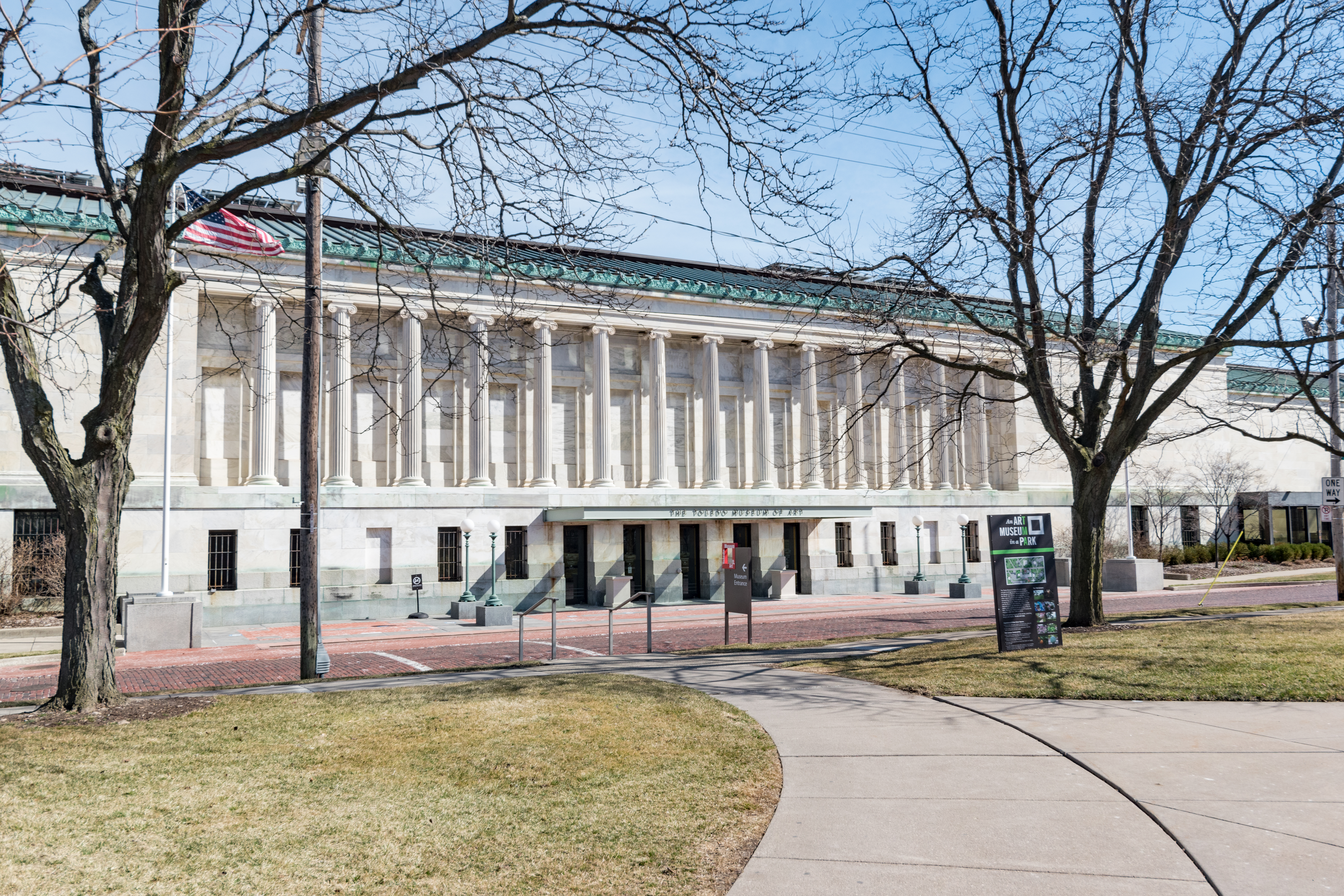
Photo: Prof. Ideal, Wikimedia Commons (CC0). Source: UToledo News.